


Wheat History
Wheat has existed in cultivated forms for over 10,000 years.
Wheat was mentioned extensively throughout the whole Bible and lots of other ancient records:
The land of wheat and barley is considered as “good land” and “God’s blessings” (Deuteronomy 8:7-9).
The famous “Ezekiel Bread” (Ezekiel 4:9) also contains ingredients of wheat, barley, spelt and others, which is praised as the healthiest bread even in modern days.
Since wheat existed for so many years, why is there an increase of wheat-related health complications?
To answer this question, let’s look at how the genetics of wheat has changed throughout history and how the use of herbicide glyphosate makes wheat become toxic.
THE EVOLUTIONARY HISTORY OF WHEAT
Wheat was first domesticated around 10,000-12,000 years ago in the Fertile Crescent region formed by the Euphrates and Tigris rivers in what is now Turkey, Syria, and Iraq. Einkorn and Emmer were the dominant species.
The origin of Bread Wheat (Triticum aestivum) was a rare hybridization event in the nature.
First, wild einkorn (AA genome) and a wild goatgrass (BB genome) hybridized to create wild emmer (AABB). Then thousand years later, cultivated emmer (AABB) hybridized with another wild goatgrass, Aegilops tauschii (DD genome) to eventually form the first bread wheat (AABBDD). This was an extremely rare natural occurrence. This is why bread wheat did not exist in the wild.
Bread wheat was first cultivated until later in agriculture in the South Caspian region 8,500-9,000 years ago.
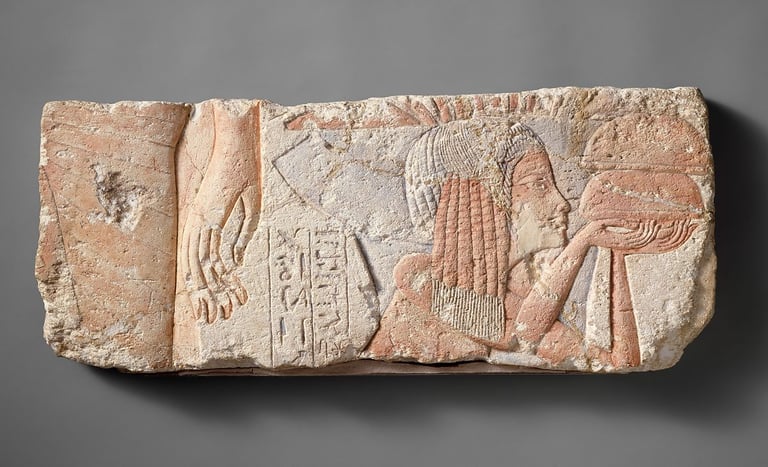
“Relief Depicting the Nurse Tia” from 1353–1336 B.C. (The Metropolitan Museum of Art) https://www.metmuseum.org/art/collection/search/544674
Einkorn, emmer, spelt, barley were the primary wheat species consumed in ancient times.
It took a very long time for bread wheat to spread across Europe, Asia and Africa and to become dominant. Around 4,000 years ago, farmers started saving seeds for local domestication.
Wheat, barley and spelt was mentioned in the Hebrew Bible during the times in ancient Egypt (Exodus 9:31-32).
Historians found emmer wheat was the main wheat in ancient Egypt. The Romans adopted emmer from Egypt and called it "Pharaoh's wheat". (source)
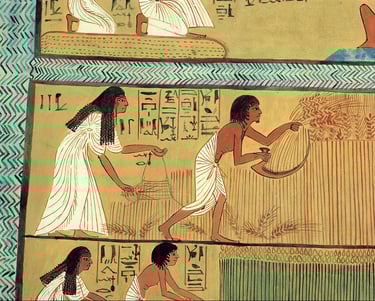
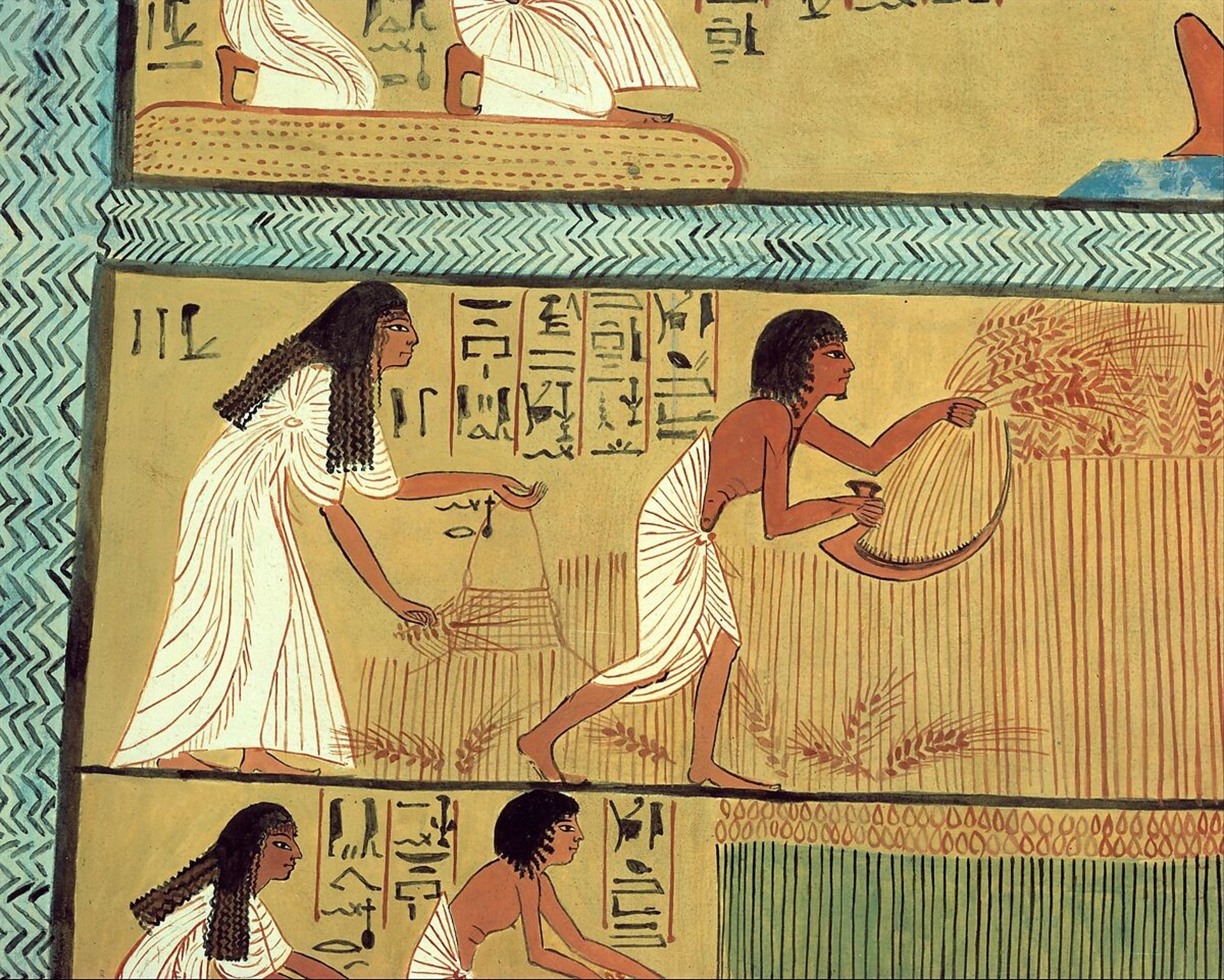
Facsimile of a painting in an Egyptian tomb from 1295-1213 B.C. depicting Sennedjem and Iineferti harvesting grain (Metropolitan Museum of Art) https://www.metmuseum.org/art/collection/search/548354
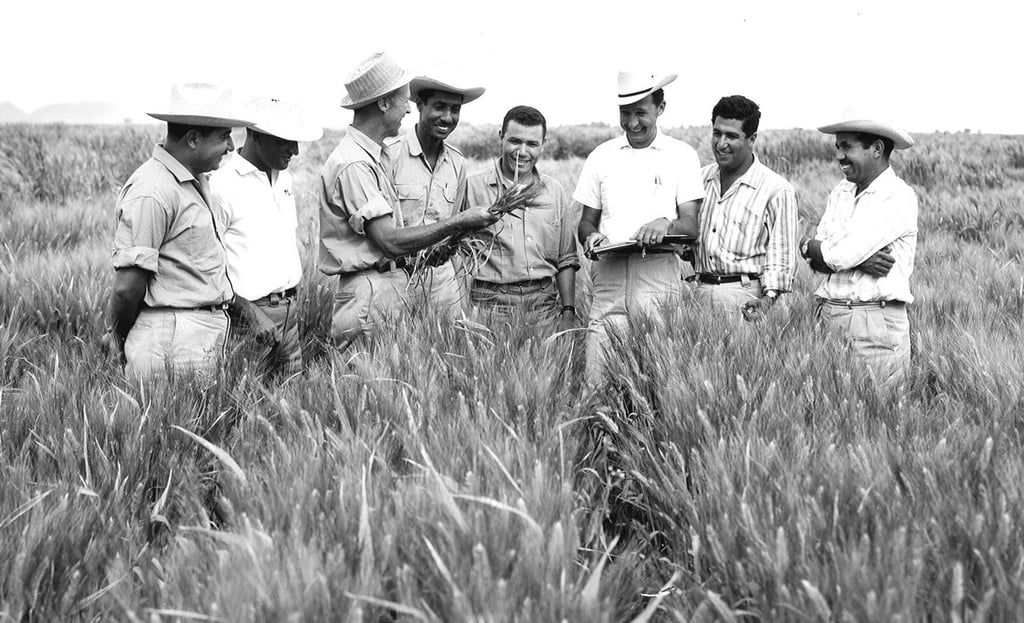
Norman Bourlaug (center), commonly known as “The Father of the Green Revolution,” training young scientists at the International Maize and Wheat Improvement Center in Mexico
Image credit: "Dr. Borlaug training scientists" by CIMMYT is licensed under CC BY-NC-SA 2.0
After World War II, The Green Revolution took place in 1945-1975.
Norman Borlaug, an American plant pathologist and often known as “The Father of the Green Revolution”, was in a joint program between the Mexican Ministry of Agriculture and the Rockefeller Foundation. Borlaug developed the first high-yield semi-dwarf wheat.
The increased disease resistance and reduced height improved yield.
Millions of farmers who have successfully grown the new wheat varieties have greatly increased their income. This has stimulated the rapid growth of the whole agro-industry by increasing the demand for fertilizers, pumps, machinery, and other materials and services.
Borlaug earned the 1970 Nobel Peace Prize for developing a disease-resistant strain of dwarf wheat that increased food production and helped feed the world’s hunger.
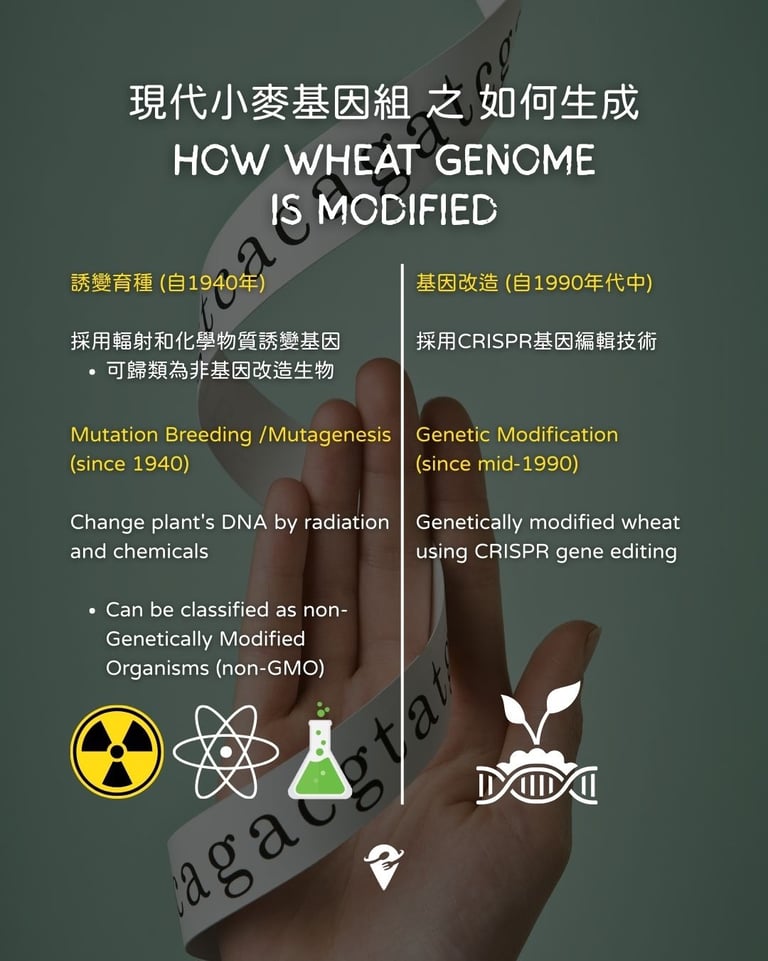
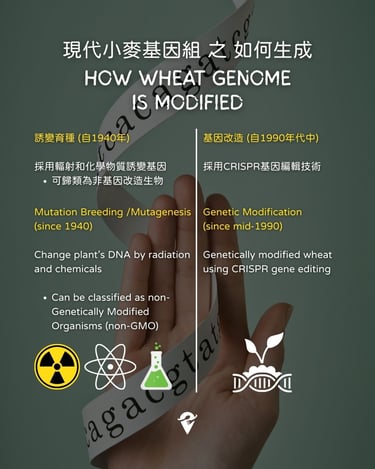
Since 1940, plant breeders learned that they could make mutations happen faster with a process called mutagenesis. Radiation or chemicals are used to change the plant's DNA so as to produce a desirable trait (source). This is called Mutation Breeding, mainly for higher yield.
X-ray radiation was initially used as a mutagen in 1930s. Later scientists started using gamma and neutron radiation because nuclear research centres were established. After World War II, scientists found chemicals was another easier way to work with in mutations (called Chemical mutagenesis)(source 1)(source 2).
(click image to enlarge)
Since the mid-1990, genetically modified (GM) grain came into the world, mainly using CRISPR gene editing. This technology allows precision in scissoring genetic code to produce expectable outcome. Genetically modified wheat is still not commercialized due to public opposition (source).
Mutation breeding has been the common alternative to genetic engineering, as the end product is still classified as non-GMO (Genetically modified organisms) but the induced mutagenesis can create mutations in plants for more desirable characteristics like disease resistance, better yield, altered fruit colours.
Mutation breeding has been used for developing 3,200+ mutant varieties in different crops, which are registered in the database of the International Atomic Energy Agency (FAO/IAEA). 270+ bread wheat mutant varieties were registered (source 1)(source 2)(source 3).
Although there are still farmers who use natural breeding methods, most of the commercial farms around the world rely on mutant wheat varieties. Durum wheat and bread wheat are the two species that dominate the global wheat production and mutation research.
Another reason to use chemical mutagenesis on wheat is for herbicide resistance. For large-scale wheat production, herbicides are often used for weed control.
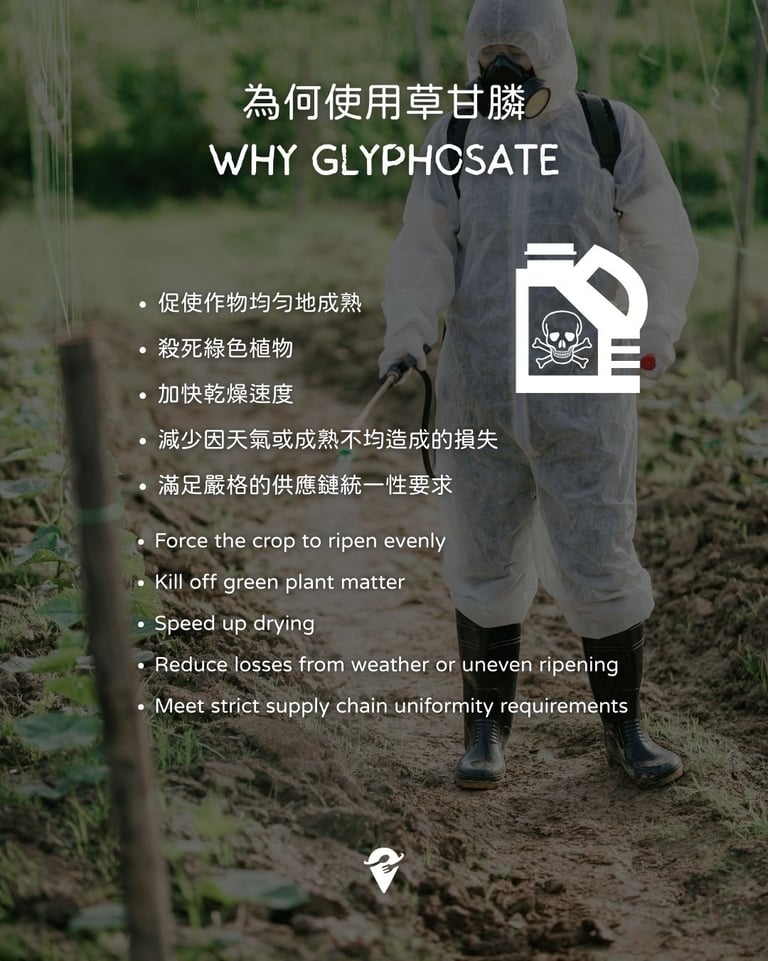
Since 1974, Monsanto commercialized the herbicide glyphosate (Roundup®) as a pre-harvest weed control treatment and drying crops (source). This herbicide is applied just before 1-2 weeks before harvest.
(click image to enlarge)
By applying glyphosate just before harvest, farmers can:
Force the crop to ripen evenly
Kill off green plant matter
Speed up drying
Reduce losses from weather or uneven ripening
Meet strict supply chain uniformity requirements
It is efficient, predictable and built into the economics of modern agriculture.
Although glyphosate has been considered to be nontoxic to humans (source), the World Health Organization’s International Agency for Research on Cancer (IARC) classified glyphosate as a “probable human carcinogen” in 2015 (source).
Glyphosate disrupts the tight junctions in the small intestinal lining and cause leaky gut. It damages the barrier that protect our body from environmental toxins and induce chronic inflammation.
(Read more: Glyphosate and Leaky Gut)
IMPACTS FROM GENOME CHANGES
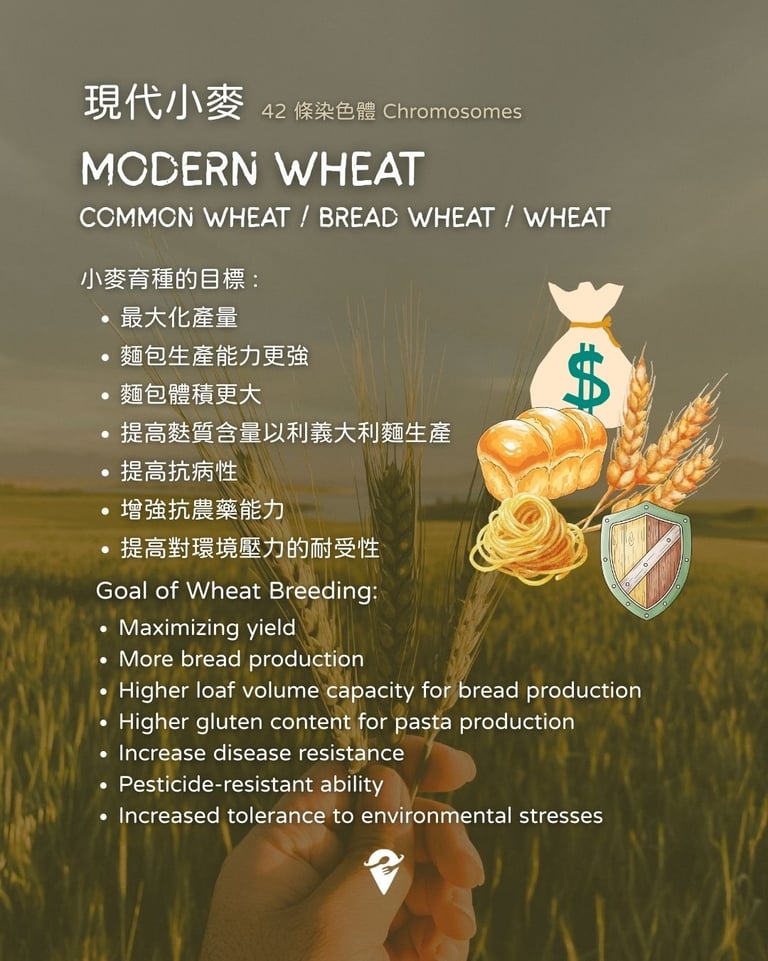
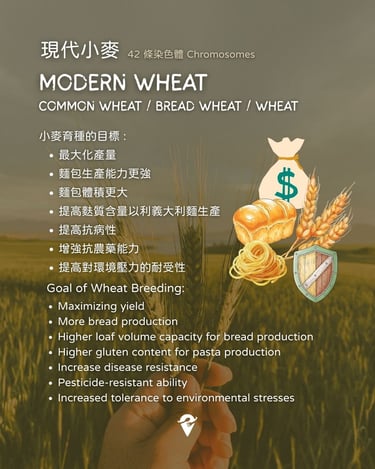
The Green Revolution and the common practises of mutation breeding have always focused on:
Maximizing yield
More bread production
Higher loaf volume capacity for bread production
High gluten content for pasta production
Increase disease resistance
Pesticide-resistant ability
increased tolerance to environmental stresses, etc.
The modern wheat we consume today is the result of economic benefits. It was never designed for better health – nutritional quality or digestibility.
Actually, no one knows the long-term impact of consuming mutated wheat varieties. We only start to become aware and learn about gluten sensitivity or intolerance in the past decade.
The gluten protein composition in modern wheat has greatly altered compared to ancient wheat types.
(click image to enlarge)
Increased Amylase Trypsin Inhibitors (ATIs)
Wheat naturally contains Amylase trypsin inhibitors (ATIs), a natural pesticide that protect it from pests. When wheat is created for increased in disease resistance, the content of ATIs also increased.
ATIs are highly resistant to human digestion. Increased ATIs leads to
Indigestion
More gastrointestinal disorders because of indigestion, such as bloating, constipation, gas.
Indigested substances ferment in the gut and may further trigger more innate immune responses in the gut wall, leading to inflammation.
The influence applies even in healthy individuals. ATIs are already known as the allergens and triggers of non-celiac wheat sensitivity (or known as wheat intolerance)(source).


(click image to enlarge)
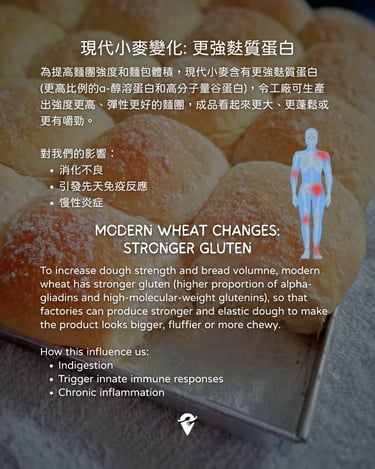
Stronger Gluten
The baking quality of wheat is primarily determined by the gluten proteins, glutenin for elasticity and strength, and gliadin for extensibility and viscosity.
Apart from disease resistance and high yield, modern wheat breeding focus on increasing dough strength and bread-making volume. The gluten network in ancient wheat is weaker and less elastic. The end product has a higher density and volume is smaller. Now modern wheat has stronger gluten (higher proportions of alpha-gliadins and high-molecular-weight glutenins), so that factories can produce stronger and elastic dough to trap CO₂ gas during baking. The result? Product looks bigger, fluffier or more chewy.
These altered protein contents make modern wheats much harder to digest (even the end product looks soft) and more likely to trigger innate immune responses that leads to chronic inflammation.

(click image to enlarge)
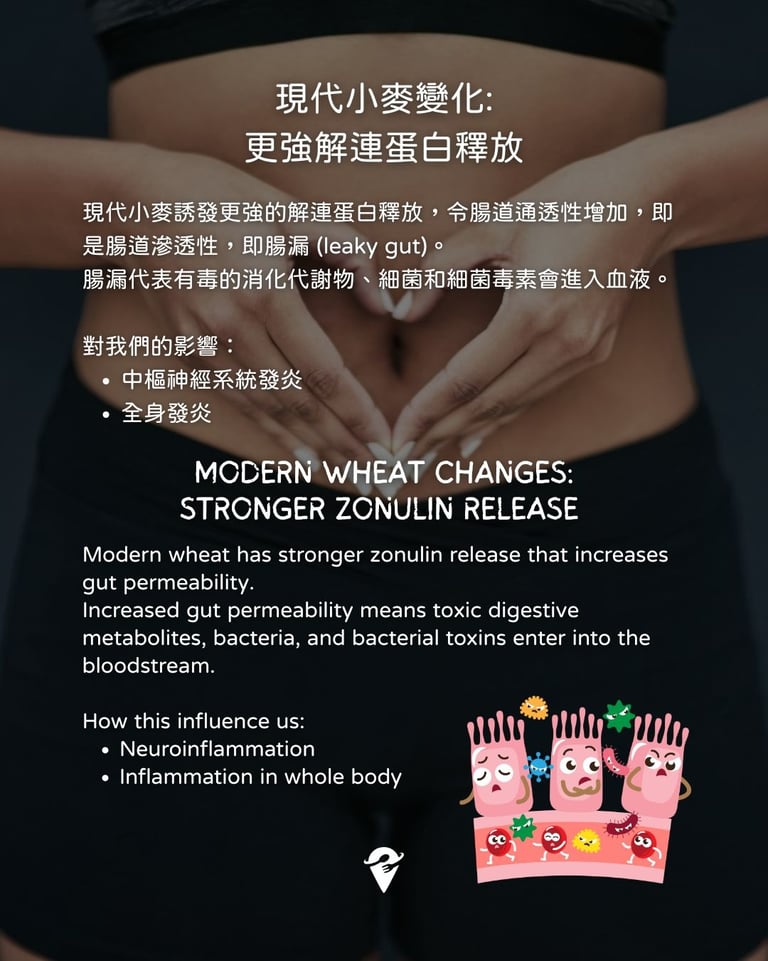
Stronger Zonulin Release
Compared with ancient wheat types, modern wheat also has stronger zonulin release that contributes to increase in gut permeability.
Increased gut permeability means toxic digestive metabolites, bacteria, and bacterial toxins enter into the bloodstream and cause inflammation in the central nervous system and whole body.

(click image to enlarge)
Although most can handle modern wheats with no problem, many do not relate inflammation, headache, bloating, acid reflux and indigestion to wheat products.
If you have pre-existing gastrointestinal issues, inflammation and always have headaches, it is worth to reconsider your daily intake of modern wheat products.
Switching to ancient wheat grains or gluten-free diet could be an option for better health.
Online Class:
Gluten-free Foundational Course (20 Recipes)




Online Class:
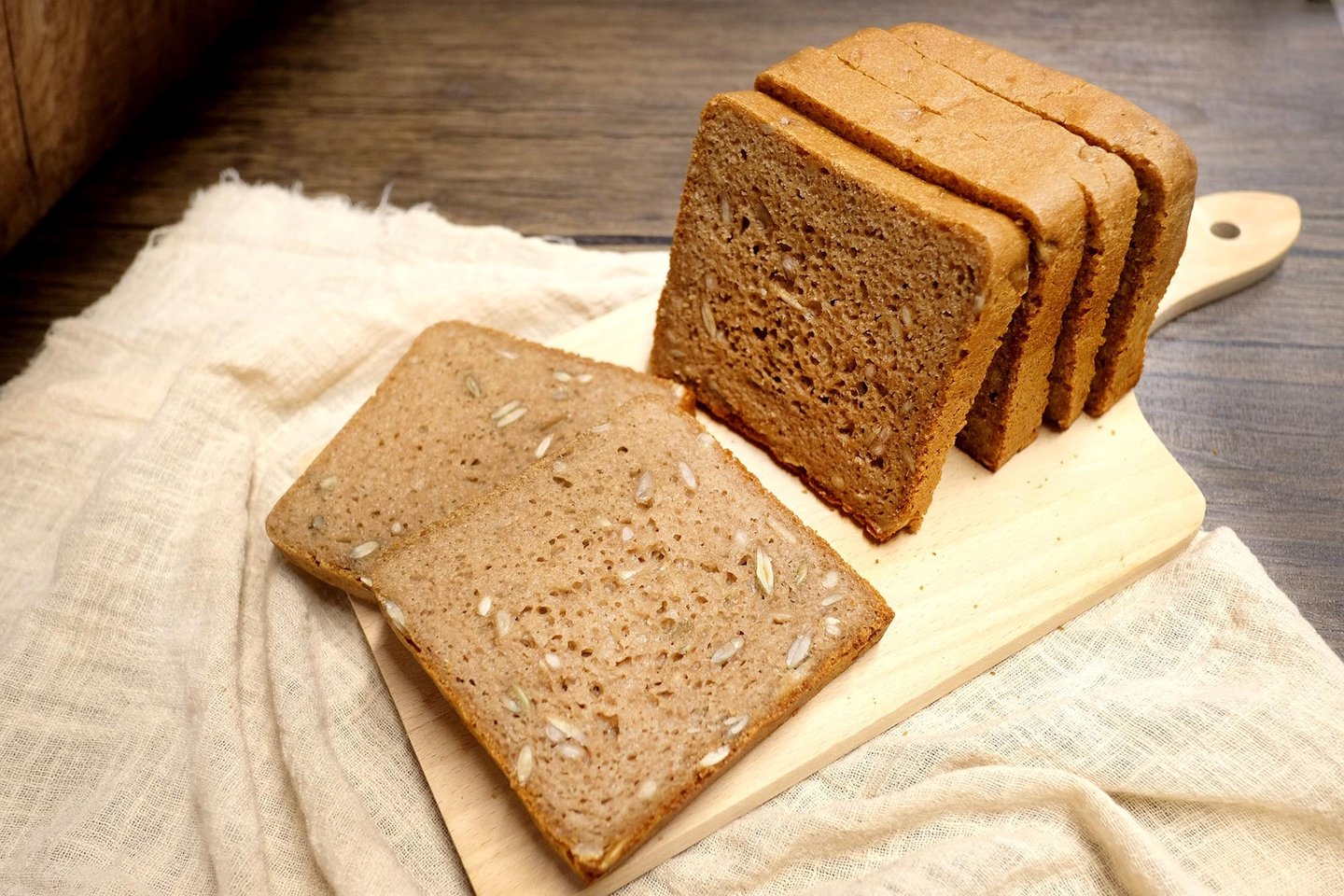
Gluten-free Basic Toast
Online Class:
Gluten-free Pizza
LEARN GLUTEN-FREE COOKING TODAY!
Start exploring our courses...
Contact us: freefromfoodsia@gmail.com
All Rights Reserved © 2026 Freefrom Foods International Association