


Glyphosate And Leaky Gut
As the organic and healthy food industry continue to bloom, attention has been drawn to the use of glyphosate, a herbicide used to kill weed and grass. Some say this chemical substance has a relation to the causing of leaky gut and other diseases.
In this article, we debunk the facts about glyphosate and review the possible threats from this chemical in prolonged consumption.
WHAT IS GLYPHOSATE
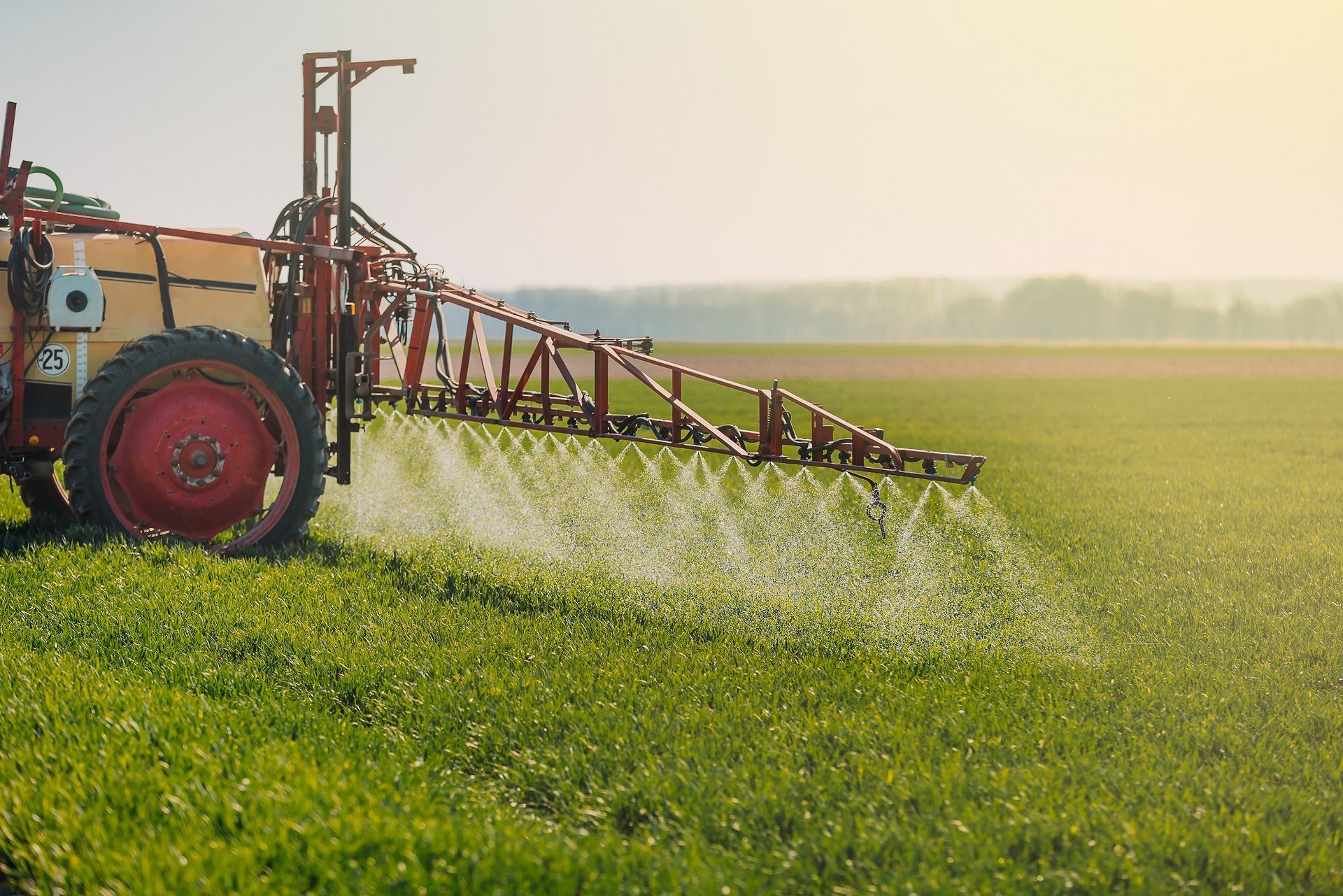
Glyphosate is a widely used herbicide that used to kill weeds and grasses to get crops ready for harvest, and even ripen fruit. Glyphosate is a nonselective herbicide – meaning it kills most plants to which it’s applied.
Glyphosate was first developed and patented in 1950 as a cation chelator. In the 1960’s, it was used as a cleaning agent for pipes.
Until 1974, glyphosate was patented by Monsanto (following the ban on DDT) and brought to market under the trade name Roundup® for agricultural use. Later in 1980s, glyphosate was marketed to consumers as a household herbicide.
Glyphosate is one of the active ingredients in Roundup. Roundup contains a variety of other ingredients that help the herbicide to stick to plants, absorb into the roots or prevent foaming, even as dyes.
In 2019, France banned the use of Roundup due to the potential safety risks to human health (source). However, other brands of glyphosate herbicides are still not yet completely banned (source).
Bayer, the German agrochemical company that acquired Monsanto in 2018 and remains the biggest glyphosate producer. Glyphosate-based Herbicides (GBH) are now produced by multiple companies including Bayer, Adama, OPL, BASF SE, Snyngenta AG, and Nissan Chemical Corp among others under brand names such as Eraser, Rodeo Aquatic Herbicide, and Kesuda. (source)
IS THE USE OF GLYPHOSATE COMMON?
YES.
Glyphosate has become the number one herbicide worldwide. It is used on fruit and vegetable crops, glyphosate-resistant (genetically engineered) crops such as canola, corn, cotton, soybeans, sugar beets, and wheat, barley, oats and beans.
USA, Brazil and China have the largest exposure to glyphosate and the U.S. currently represents 25% of the total world market on herbicide usage, according to the statistics from the U.S. Environmental Protection Agency (EPA). Glyphosate is also the most popular herbicide in Europe. In France, glyphosate was detected in over 99% of human urine samples. In central India, glyphosate was detected in 93% of urine sample. (source 1)(source 2)(source 3)(source 4)
Not only as a herbicide, since 1992, glyphosate has even been widely used as a ripening agent or desiccant on wheat, oats, rye, lentils, peas, flax, potatoes, buckwheat, and millet. This allows farmers, especially in Northern climates like Scotland, Canada and Upper Midwestern states in the US, to get two growing cycles each season.
The glyphosate also has been on the rise due to the increase of glyphosate-resistant weeds and widespread adoption of “Roundup-Ready” genetically modified crops.
EXPOSURE TO GLYPHOSATE IN YOUR FOOD
As glyphosate is so widely used, traces amount of glyphosate residues may be found in various fresh fruits, vegetables, cereals, wheat, barley, oats, beans, other food and beverage commodities.
It gets into foods early in the food chain, before raw food is harvested and before it’s processed.
One study (source) of 20 brands of beer found glyphosate residue in most of the samples. Another study (source 1)(source 2) showed glyphosate was present in oat breakfast cereals at a level higher than the Environmental Working Group (EWG)’s recommended health benchmark (while organic oat breakfast cereals has a much lower level).
IS GLYPHOSATE SAFE?
The U.S. Environmental Protection Agency (EPA) claimed that there are no risks of concern to human health when glyphosate is used in accordance with its label (source). They found glyphosate has:
No risks of concern to human health from current uses of glyphosate
No indication that children are more sensitive to glyphosate
No evidence that glyphosate causes cancer in humans
No indication that glyphosate is an endocrine disruptor
Despite the above statements, we need to note that these claims are provided by the manufacturer, Monsanto. There have been virtually no studies undertaken in the US to assess glyphosate levels in human blood or urine and its potential influence.
Although glyphosate has been considered to be nontoxic to humans (source), the World Health Organization’s International Agency for Research on Cancer (IARC) classified glyphosate as a “probable human carcinogen” in 2015 (source). Studies on the potential health risks associated with its use also start to surface (source 1)(source 2)(source 3)(source 4)(source 5).
It is also found that glyphosate blocks the production of critical nutrients in soil which makes the soil deficient in nutrients for human health.
INCREASES INTESTINAL PERMEABILITY
Glyphosate disrupts tight junctions in the small intestinal lining, as it is by the gliadin protein from gluten. It damages and weaken the barriers that protect our body from other environmental toxins. The injury of tight junctions increases intestinal permeability, resulting in leaky gut.
Having a leaky gut means the lining of the intestines become more porous, allowing harmful substances such as bacteria, toxins, and undigested food particles to leak into the bloodstream.
This influx can trigger chronic inflammation and immune responses, and initiate diseases such as celiac disease, thyroid disease, joint diseases, and asthma.
Glyphosate also enhances the damaging effects of other food-borne chemical residues and environmental toxins, which increases burden on the liver and cause harm to the body.


ALTERS GUT MICROBIOTA
Although low-dose glyphosate is considered safe by the U.S. ADI, study (source) found that even at low dose such exposure is enough to alter gut microbiota composition.
Glyphosate is also found to be a direct or indirect activator that leads the body to a pro-inflammatory state.
Salmonella and Clostridium are highly resistant to glyphosate, whereas good bacteria Enterococcus, Bifidobacteria, and Lactobacillus are known to be killed by it (source 1)(source 2).
Maintaining a good microbiome in our gut is crucial for our digestion and immune system. The disruption of gut microbiota can lead to a compromised immune system, skin problem (eczema), GI disorders (bloating, gas, and discomfort), GI disorders (inflammatory bowel disease (IBD) and irritable bowel syndrome (IBS)), and the development of neurological issues.


INCREASES RISK OF GI DISORDERS
It is found there is association of glyphosate exposure to the increased risk of GI disorders, such as celiac disease, inflammatory bowel disease (IBD) and irritable bowel syndrome (IBS).
A study on predatory fish provided a strong evidence for a link between glyphosate and celiac disease. They found remarkable effects in the gut that parallel the features of celiac disease. (source)
It is estimated that 1 in 20 people in North America and Western Europe suffer from celiac disease.
And in the below chart, the prevalence of celiac disease has a similar pattern with the usage of glyphosate on wheat in the U.S. Could glyphosate be the contributing factor to celiac disease? You be the judge.


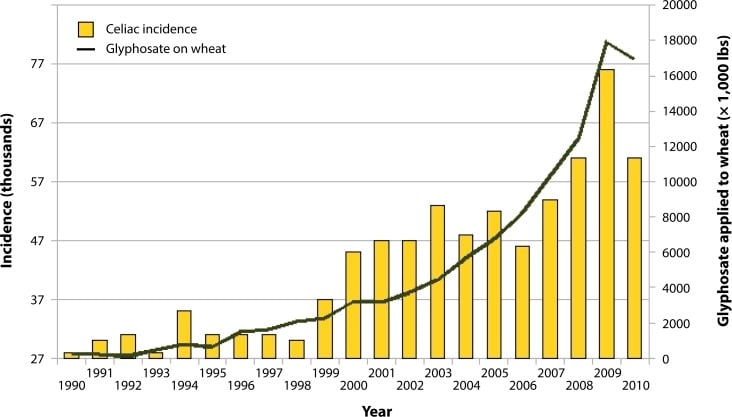
Extracted from (source) on the Hospital discharge diagnosis of celiac disease and glyphosate applications to wheat. Sources: USDA:NASS; CDC. (Figure courtesy of Nancy Swanson).
CAUSES NEUROINFLAMMATION
As mentioned above, glyphosate causes the increase of intestinal permeability, the leaky gut condition triggers pro-inflammatory cascades in the central nervous system (CNS) and disrupts the blood-brain barriers (BBB).
Having chronic neuroinflammation in the central nervous system may cause synaptic dysfunction and learning impairment.
As researchers study on the relation between celiac disease and autism, they found a possible link between glyphosate exposure and autism because of leaky gut syndrome directly induced by glyphosate.


WHAT CAN I DO?
GO ORGANIC
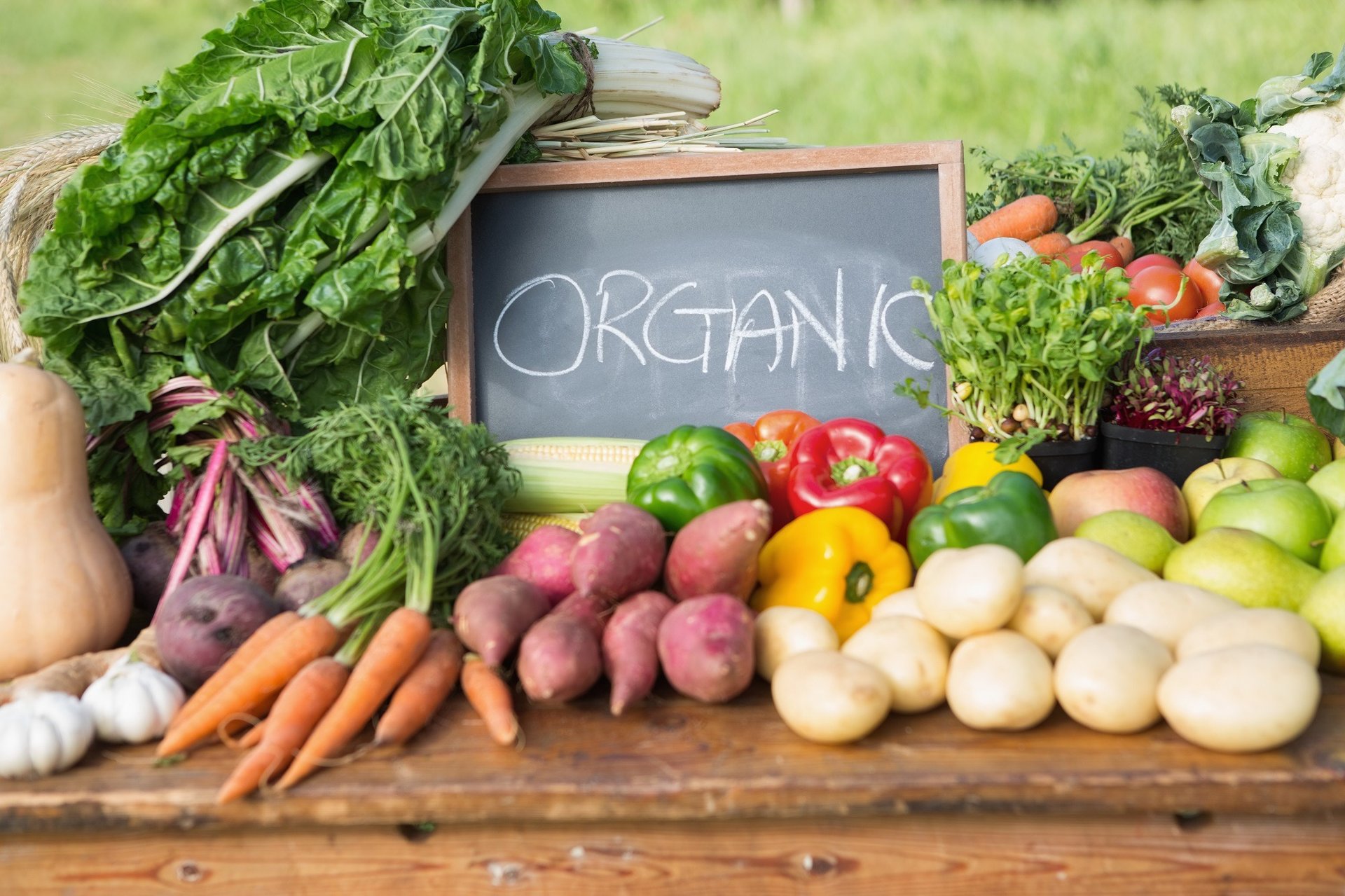
Glyphosate is banned in organic farming. This means eating organic can reduce your exposure to glyphosate.
One study (source) found that adults and children who started to eat organic had 70% lower levels of glyphosate within 6 days.
CONSUME A FERMENTED DIET
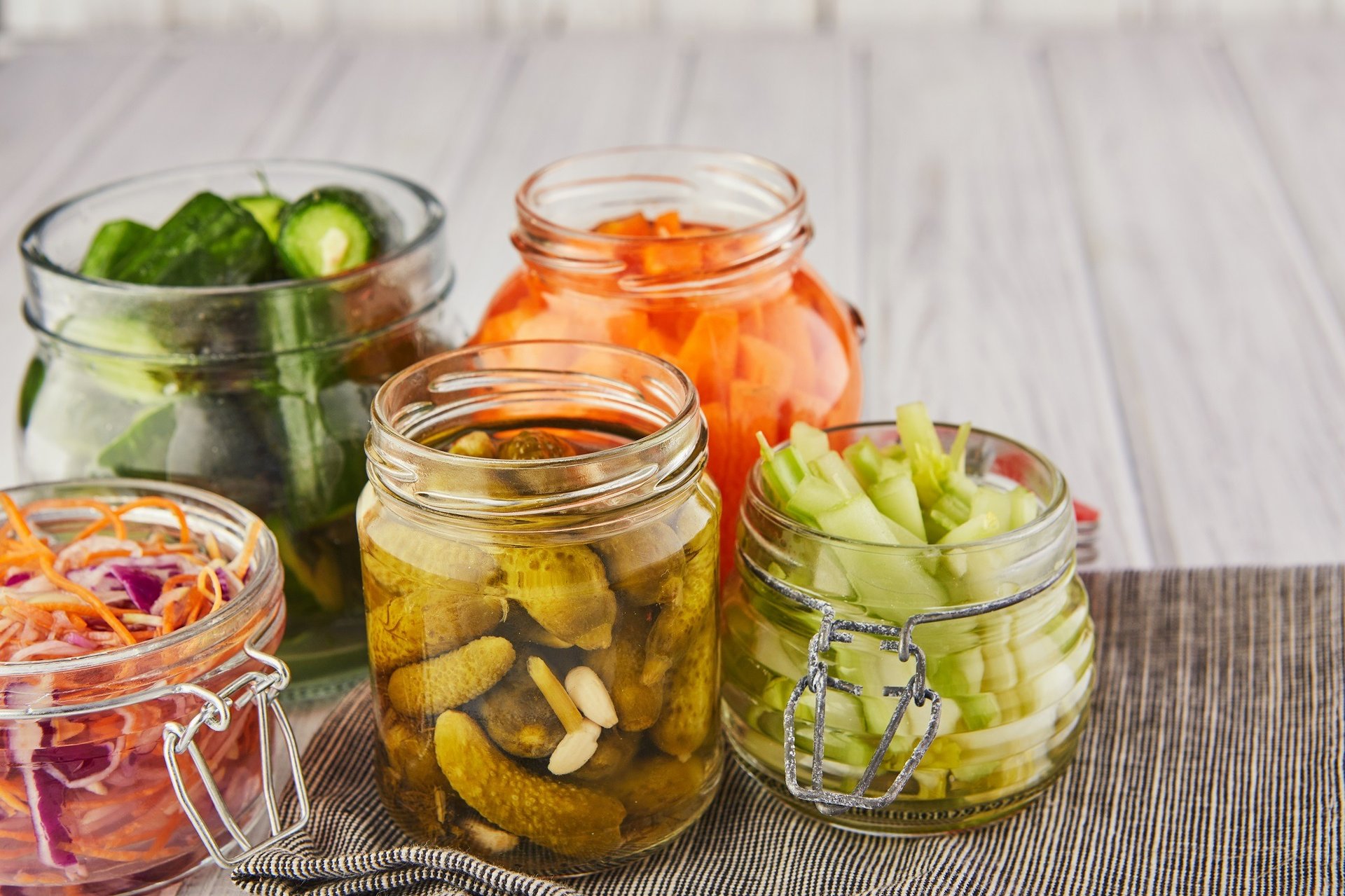
Apart from drinking sufficient water each day and have regular exercise (both to flush out toxins), consuming a fermented diet (such as yogurt, kimchi, natto, miso, and sauerkraut) helps to restore beneficial gut bacteria killed off by glyphosate.
INTAKE QUERCETIN
Daily intake of fruits and vegetables that are rich in polyphenols, especially quercetin.
Quercetin is found to help alleviate intestinal inflammation and improves intestinal functions by regulating gut microbiota composition. It also helps to prevent neuronal damage and neuroinflammation. (source 1)(source 2)
Online Class:
Gluten-free Berries Banana Quickbread





Online Class:
Gluten-free Dumplings
Online Class:
Gluten-free Foundational Course (20 Recipes)
LEARN GLUTEN-FREE COOKING TODAY!
Start exploring our courses...
Contact us: freefromfoodsia@gmail.com
All Rights Reserved © 2026 Freefrom Foods International Association